In 1983, the student population started at approx. 200 and peaked at 468 as the highest attendance rate. In 2001, the elementary school transitioned their grade 6 and 7s to surrounding middle schools which has resulted in having an attendance rate hovering the 300 mark.
In a 2000 Census, the school released a demographic of their students.
19% of the children were from families on income assistance
11 students were on the lunch program
12 students on Ministry I.E.Ps.
11 international students
The school also presented a demographic of ESL and First National students.
2001-2002
ESL: 41 students
First Nations: 35 students
2005-2006
ESL: 39 students
First Nations: 32 students
In this graph, the earliest information released is from 2004. During this 17 year demographic span, this elementary school attained the highest student enrollment in 2016 with 292, with a close 290 in 2019. The lowest enrollment rate was found in 2011 with 229 students. in 2020/2021, this elementary school has a total of 261 students, in which 43 are indigenous and 27 are special needs.
Sources Used For This Page: Abbotsford Post and Terry Fox School Archives: From The Reach Archives, studentsuccess.gov.bc.ca
Terry Fox Elementary officially opened its doors on January 28th, 1983. The opening ceremony was accompanied by Terry Fox’s parents, Rolly and Betty Fox.
Fun Fact No.1!
Terry Fox has been honored in quite a few places. There are 15 highways and streets, 14 schools and 1 mountain all named after him!
The Timeline of Creating Terry Fox Elementary
June 16, 1982: Babich Street in Abbotsford (formally known as Matsqui) was receiving a new school. At a School District 34 board meeting, trustees had proposed to name the school Terry Fox and voted to accept the name. They could only move forward with the name if they were able to be granted permission from Terry’s parents Rolly and Betty. The board also needed the approval from the Canadian Cancer Society, the agency governing use of Fox’s name. In addition to the discussion of naming the school, trustees also discussed holding a “Terry Fox Run” to coincide with opening the new school in the fall, if the name had been approved.
June 26, 1982: The School District Trustees made the decision to delay the opening of the new elementary school–the construction was to be complete by September– by waiting to push staffing until January. 138 concerned parents spoke against the decision by signing a petition opposing the delay. The parents believed that having students move into the new school mid-year would cause affect in their learning and over-crowding in other elementary schools. The petition resulted in the reversal of the school districts decision. The distract had made it possible to go ahead with the reversal because of the savings made by closing Peardonville Elementary and adjusting the staff and the school could proceed with its original opening date.
Fun Fact No.2!
On July 7th 1982, the school district had received permission from Terry’s parents for their son’s name to be used to name the new school! The School District did not come up with the idea of using Terry Fox’s name, it was actually a suggestion that had come from a parent living in the Babich area.
Nov 10, 1982: The school opening had continued to experience major delays from its original opening date in September. A construction strike in the summer months had set the opening schedule back FIVE weeks! The staff had also discovered that the general contractor for the school had financial difficulties. While the district lawyers negotiated with the contractor, it had placed the building process another SEVEN weeks behind schedule. As they were preparing to open the new school, students would be moving from Phillip Sheffield, John Maclure, Margaret Stenersen and Abbotsford Elementary.
Fun Fact No.3!
The opening of the school had also been delayed from its original opening date due to a mishap in the creation of the Terry Fox statue. The creator of the statue had created Terry Fox missing the wrong leg
Sources Used For This Page: Fred Fox, Terryfox.org, abbyschools.ca, Abbotsford News (from the Reach Archives), and Angela Magnon
A positive, caring community of learners dedicated to individual success and excellence.
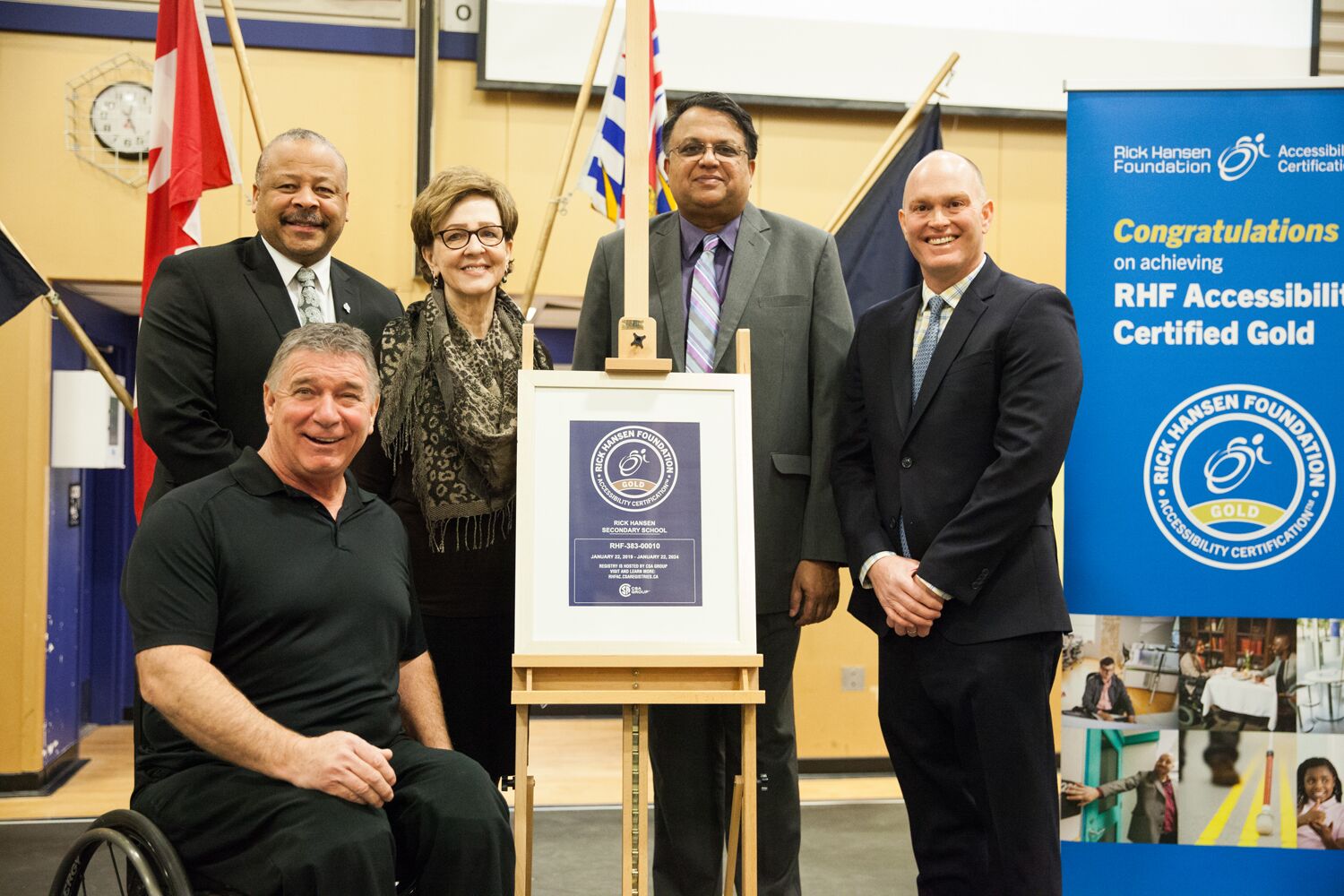
Accessibility Certified Gold
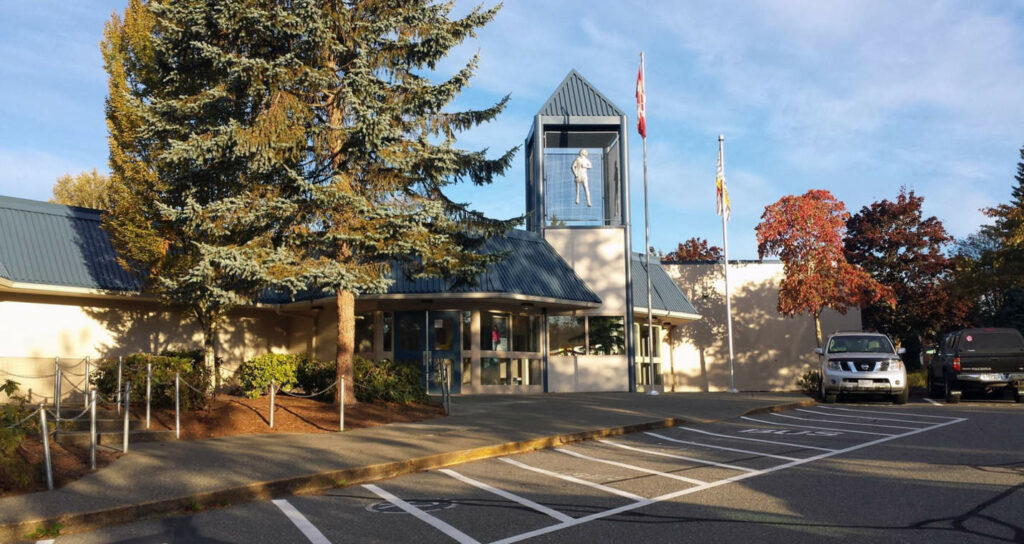
in 2019, Rick Hansen Secondary was the first school to receive this rating in Canada. This accessibility certification was given by the Rick Hansen Foundation. In order for this school to obtain certified gold, they included in the construction elevators, wayfinding, accessible cafeteria, visual alarms, cane detectable trophy cases and water bottle fill stations, fully accessible washrooms, automated double door entries, guardrails, large accessible parking spaces, ramps, and nosing on exterior stairs.
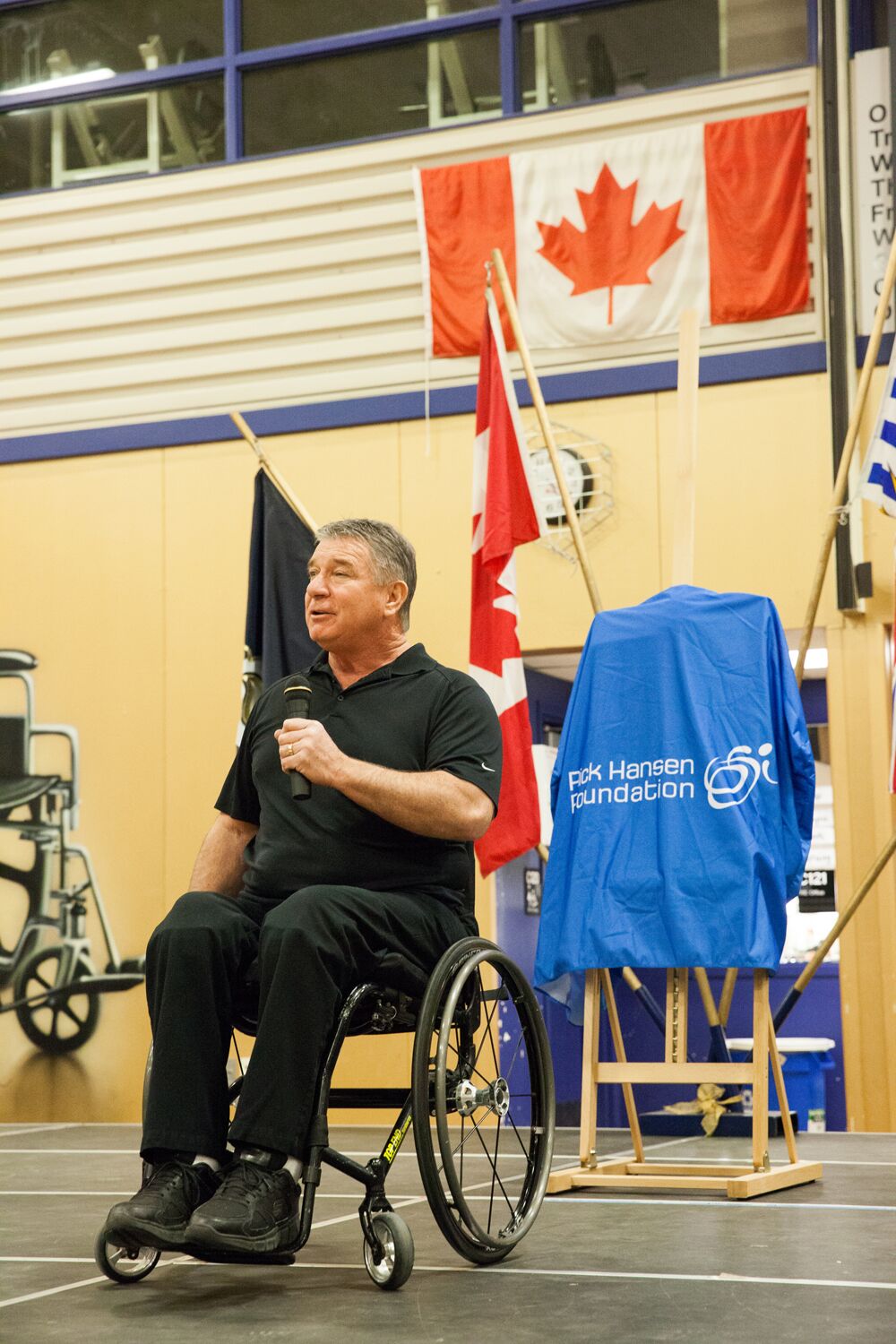
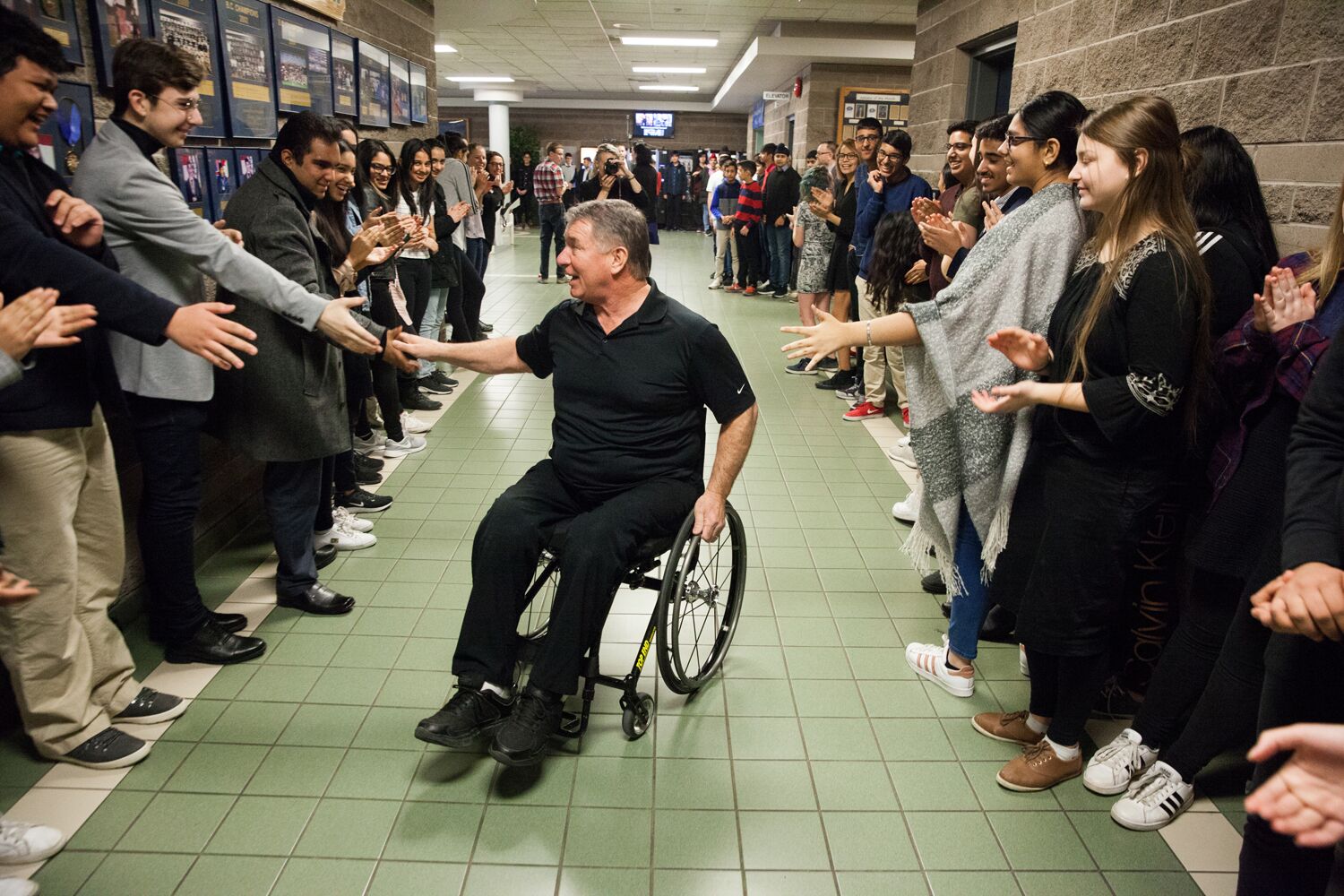
Rick Hansen emphasizes on physical health when he gives speeches at schools, including his own. Rick Hansen Secondary created a 40-week program that is geared towards athletes from all sports, working towards a holistic development of becoming a high-level performer. Students gain knowledge and expertise from the fields of physiotherapy, chiropractic, nutrition, sport psychology, exercise physiology, and University level coaching.
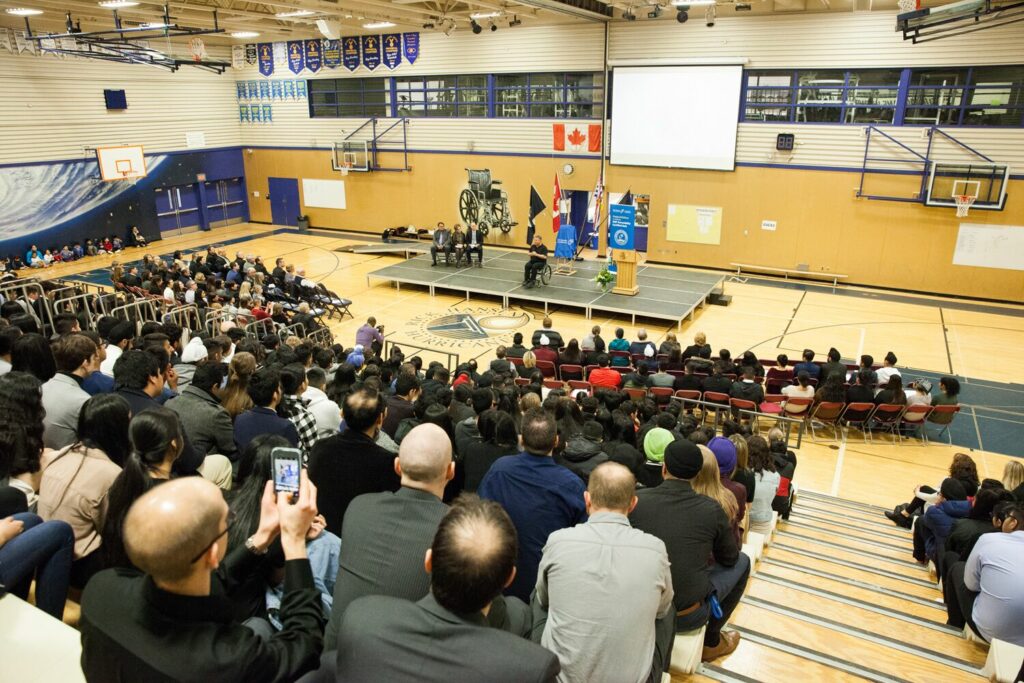
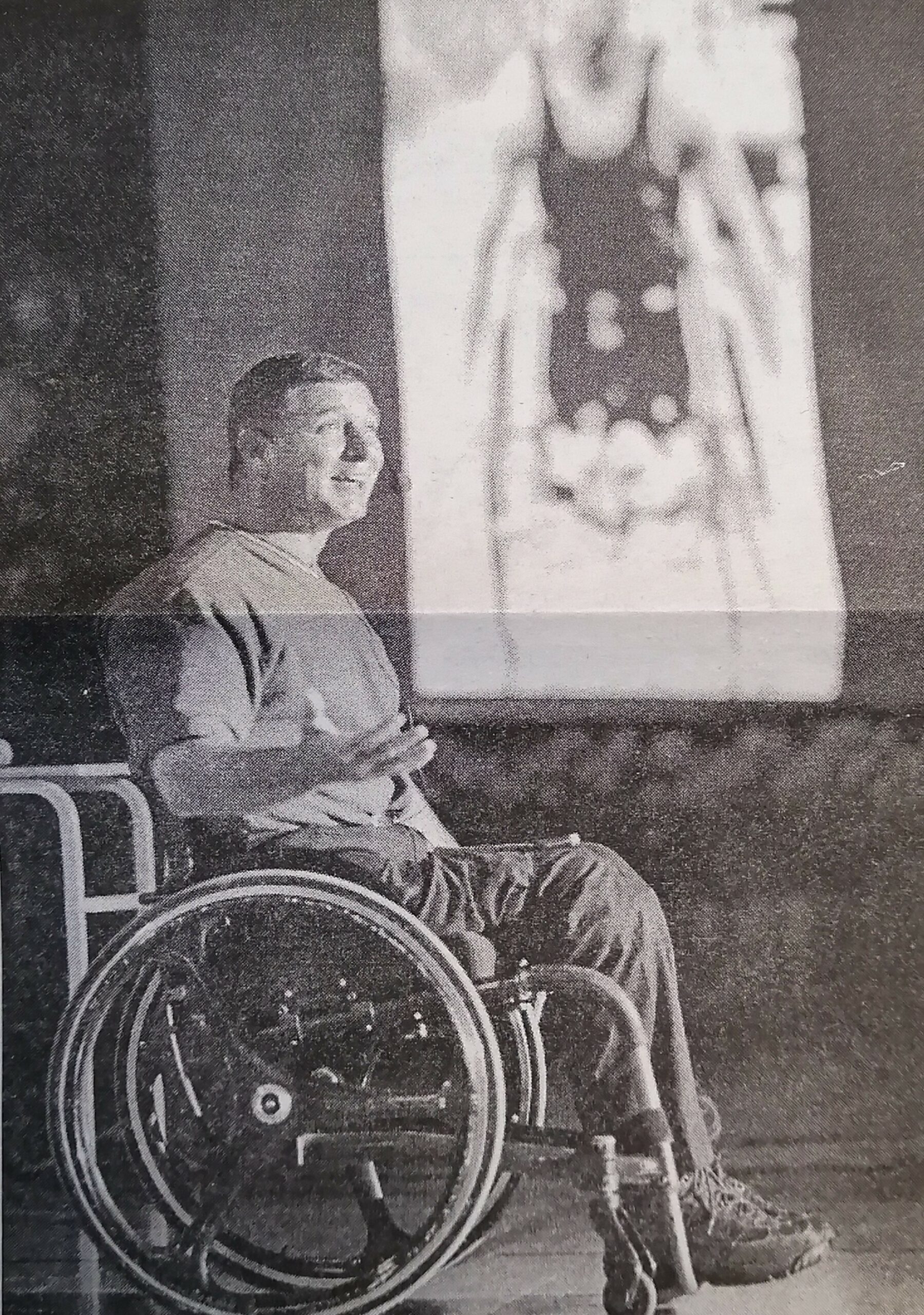
Rick Hansen giving a speech to his namesake school in Abbotsford.2019.
School of Business and Science
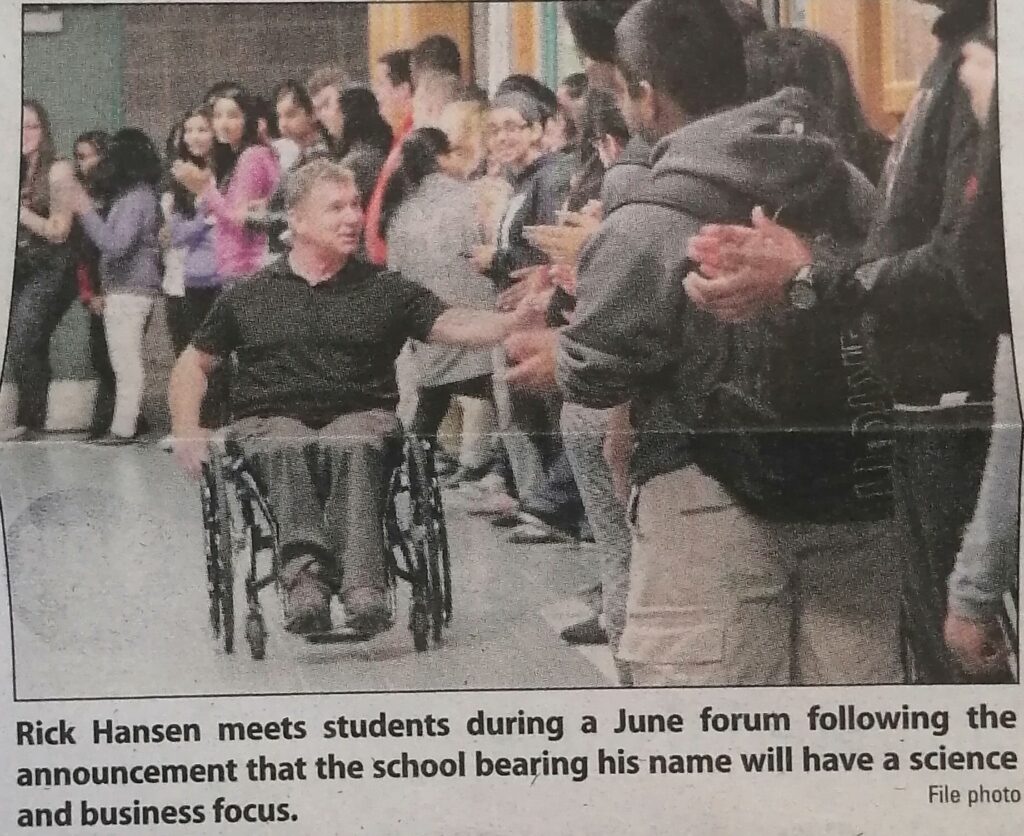
Rick Hansen Secondary has been given a unique opportunity to offer to senior students to specialize in business and sciences. These one of a kind programs in BC allows students to take advantage of targeted training, internships, and University credits. The science program combines courses into a hybrid of classroom learning and real-world experiences, that also include the opportunity to study internationally.
Abbotsford News, September 2015
Sources Used For This Page: rickhansen.com (including photos), and The Abbotsford News- The Reach Archives
Born August 1957, in Port Alberni, British Columbia, Rick was an avid sports player right from childhood: volleyball, baseball, softball, and basketball. An unfortunate accident happened to Rick at the age of 15 while travelling back home from a fishing excursion. Rick and his friend Don decided to hitchhike—catching a ride in the back of a pickup truck—the driver had lost control due to being intoxicated. This accident had cause Rick to land on a big steel toolbox, resulting in breaking his back and becoming paralyzed from the waist down.
Rick is known for having a resilient spirit, less than a year after his tragic accident, he had decided to return to sports while attending UBC. In 1986, Rick became the first person with a disability to graduate UBC with a degree in physical education.
Returning to his love of sports, between 1979 and 1984, Rick accumulated many awards. 19 coming from international wheelchair marathons, 4 world titles, and 9 Pan American Wheelchair gold medals—playing on the Vancouver Cable Cars wheelchair basketball team is included.
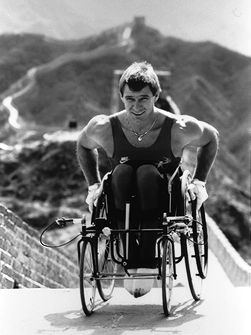
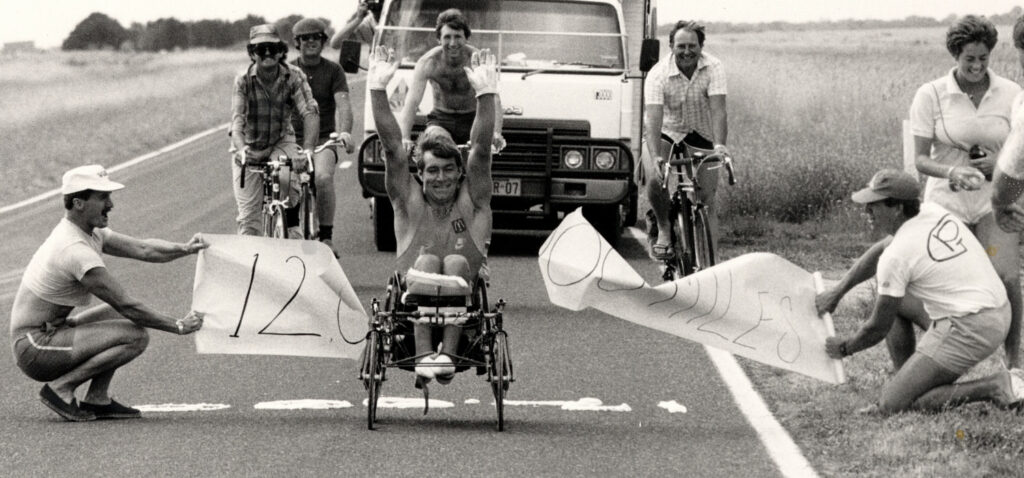
After his season of sports, Rick had been inspired by Terry Fox’s Marathon of Hope and created the Man in Motion World Tour and the Rick Hansen Foundation. The goal for this tour was to raise awareness and fundraising for spinal cord injuries and research, as well as encouraging communities to become more accessible and inclusive with those with physical disabilities. Travelling over 40,072 kms over 34 different countries while wearing out 160 wheelchairs and 94 gloves, Rick raised more than $26 million for spinal cord research, rehabilitation, and wheelchair sports. In 2006, Rick was inducted into Canada’s Sports Hall of Fame, and celebrated the 25th anniversary celebration of the tour in 2011 by travelling across Canada, visiting 600 different communities
Sources Used For This Page: youtube.com, canadianencyclopedia.ca, sttpcanada.crd-bce.ca, and pictures are from: vancouversun.ca and historymuseum.ca
Rick Hansen High School opened its doors in September, 1993. It costed $22 million to build and initially welcomed 1100 students from grades 8-12. Gerda Fandrich, school board chairwoman, recounted the history of the school’s development in 1988. It took five years to build a school designed to meet the needs of physically-challenged students. Rick Hansen urged B.C.’s education ministry to continue to build schools that are accessible.
Timeline of Creating Rick Hansen High School
Sept 26, 1992: Rick Hansen admitted he was reluctant to lend his name to the new high school. When Hansen was interviewed, he commented if he agreed with the school being named after him “well no, I’m still alive”. It was the commitment on the part of the School District to make the school accessible for anyone, convinced him.
Philosophy is radically changing, the building industry. That is why I think this building is so important, it is a flagship.
Rick Hansen
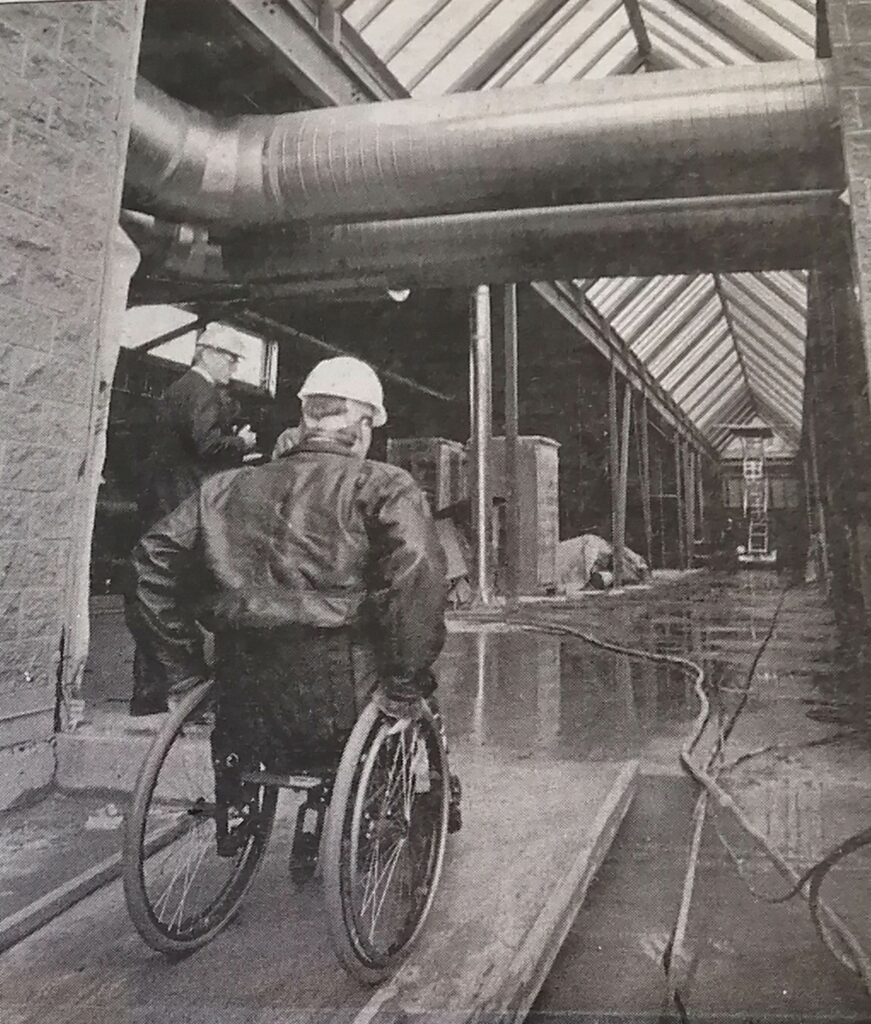
1992.Hansen visiting the building of the high school.
It is a golden opportunity, there are not very many people kids can consider heroes anymore
Bill MacGregor, Principal
June 5, 1993: Principal Bill MacGregor, his team of teachers and support staff, along with the hundreds of students who will call the new Rick Hansen Secondary School in Clearbrook their Alma Mater. They believe that the legend of the man is sure to live on for years to come. Hansen helped design his school philosophy. The school is to include a wall outside of the counselling area that is dedicated to the “Man in Motion Tour”, featuring highlights of Hansen’s world tour.
His values are intrinsic to this school and will be very much part of what we will strive for as a school population. How often do you have a living example of someone who has surmounted overwhelming obstacles to be the best he can be? What a tremendous role model. We hope our students will be more aware and sensitive to the needs of others, not just people who are physically challenged, but everyone. What better way to “keep the dream alive” than creating an awareness in our schools.
Bill MacGregor, Principal
Fun Fact No.1!
There are four public schools named after Rick Hansen! Two are Secondary Schools, one in Abbotsford, B.C and one in Mississauga, Ontario. Plus two Elementary Schools in London and Aurora, Ontario
Rick Hansen also has a township in the municipality of Killarney Ontario named after him. What was previously named the Township of Stalin, it is now the Township of Hansen.
Sept 22, 1993: During the grand opening ceremony, Rick Hansen himself performed the ribbon cutting. It had also included speeches from the Matsqui Police Color Guard, Rev. Hans Kouwenberg from the Calvin Presbyterian Church, the School Board Chairperson, Secretary Treasurer, the Superintendent, the contractor, the architect, and the Hansen family including his parents.
Encouraging, inspiring, and empowering lifelong learners.
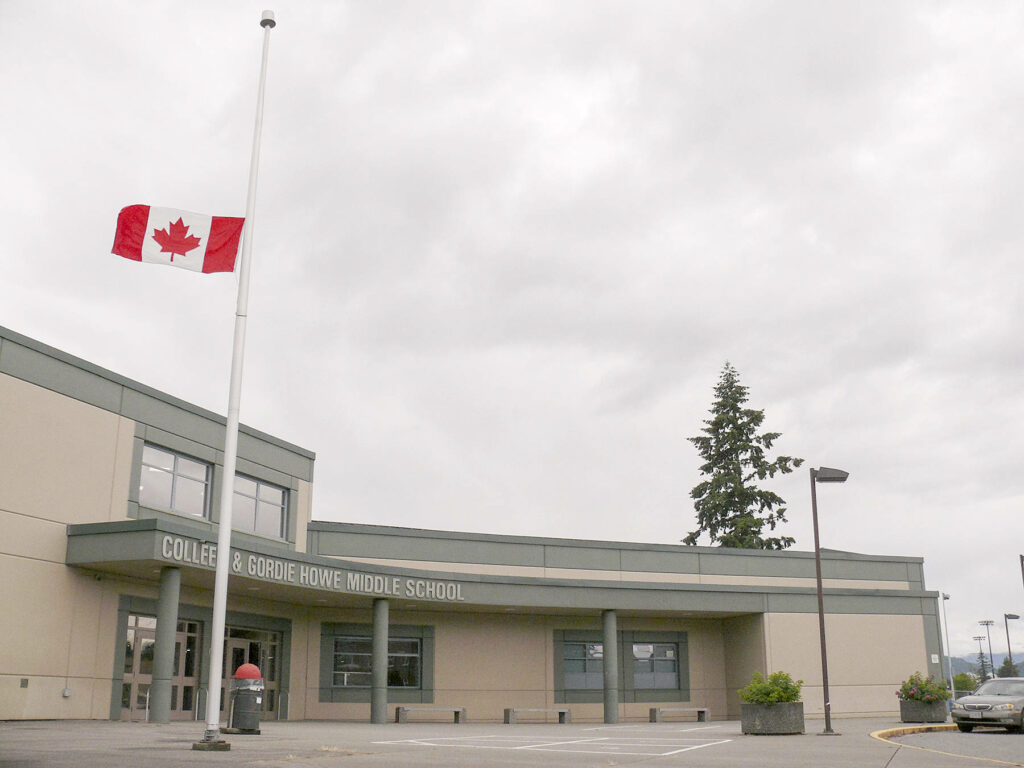
At Colleen and Gordie Howe Middle, they have the strong belief that every student is entitled to receive a quality education, provided by the best of their ability, regardless of the child’s ability or background. Education is an individual’s “ticket” to become anything he/she wants to be, regardless of personal circumstances.
WEB: Where Everyone Belongs
This unique school orientation and transition program begins at the end of August through the school year with the focus on grade six students. WEB leaders are mentors and student leaders who guide the sixth grade students. The goal is to welcome sixth grade students and to make them feel comfortable throughout the first year of their middle school experience. They help sixth grade students in discovering what it takes to be successful during the transition to Howe Middle School.
Howe Music
One of the important values Howe Middle wants to represent is the bringing together the many cultures of the students. Music at Howe is a way to bring together the different cultures, allowing to celebrate as one community. Music students are able to partake in many performances and cultural events throughout the year at school and in the community.
Some examples of cultural diversity in their music
Concert Band: traditional woodwind, orchestral percussion, and western classical music
Guitar Ensemble: famous rock tunes, and acoustic guitar
Choir
World Percussion: Dhol, Tabla, Shol
Keyboard Club
Source Used For This Page: howemiddle.abbyschools.ca
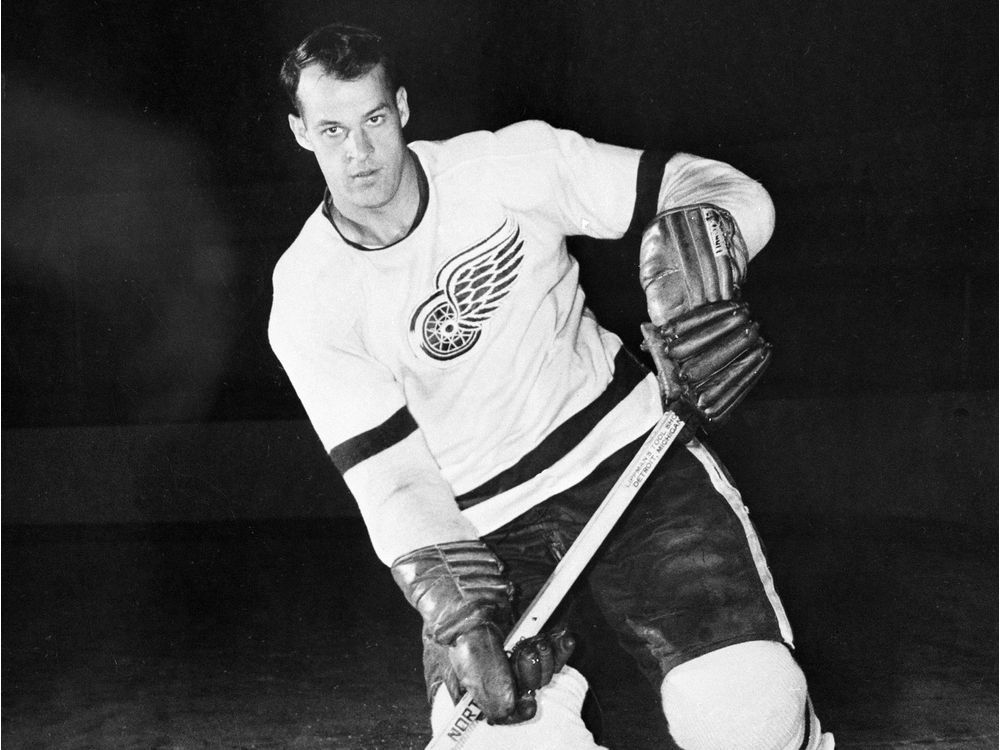
Born on March 31, 1928 in Saskatchewan, Howe entered the professional sports world at the age of 15—he attended the New York Rangers team training camp—before becoming homesick and returning to Saskatchewan. He officially made his professional debut at age 18. The Detroit Red Wings scouted him, having his hockey season start in 1946, which led him to score 700 goals by 1968.
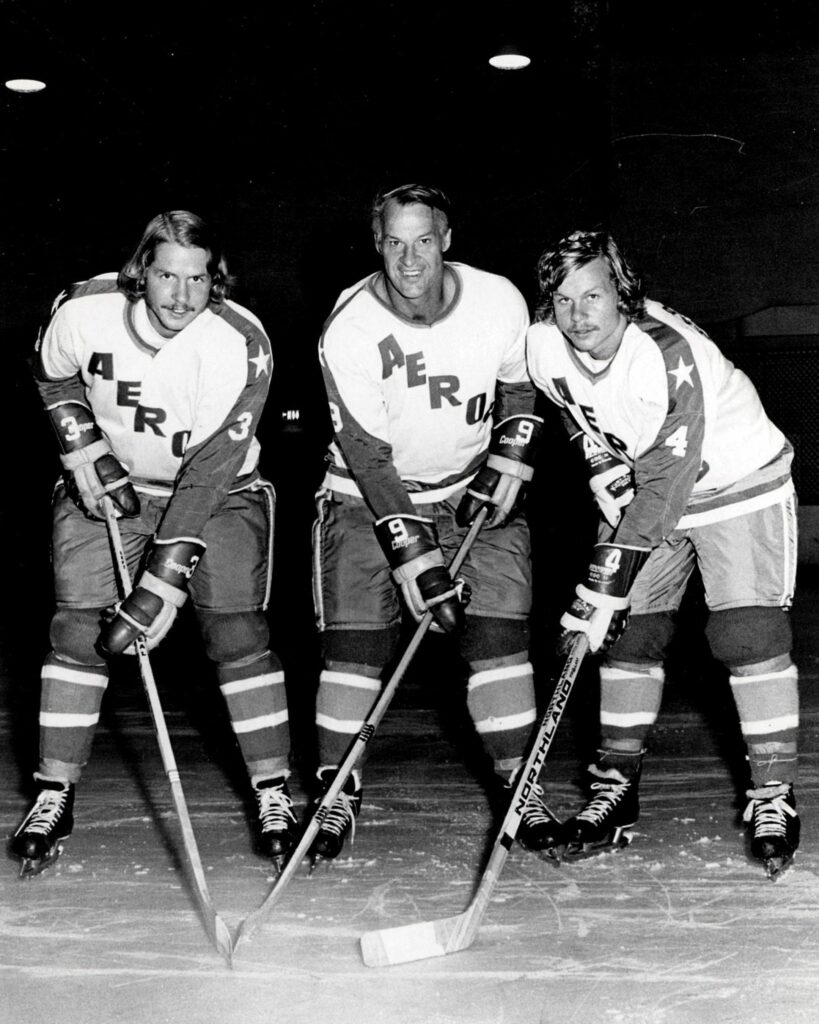
Fast forward to 1973, Howe had been retired for a whole two years when he was given the opportunity to play on the same hockey team, the Houston Aeros—now named the New England Whalers—with his two sons, Mark and Marty.
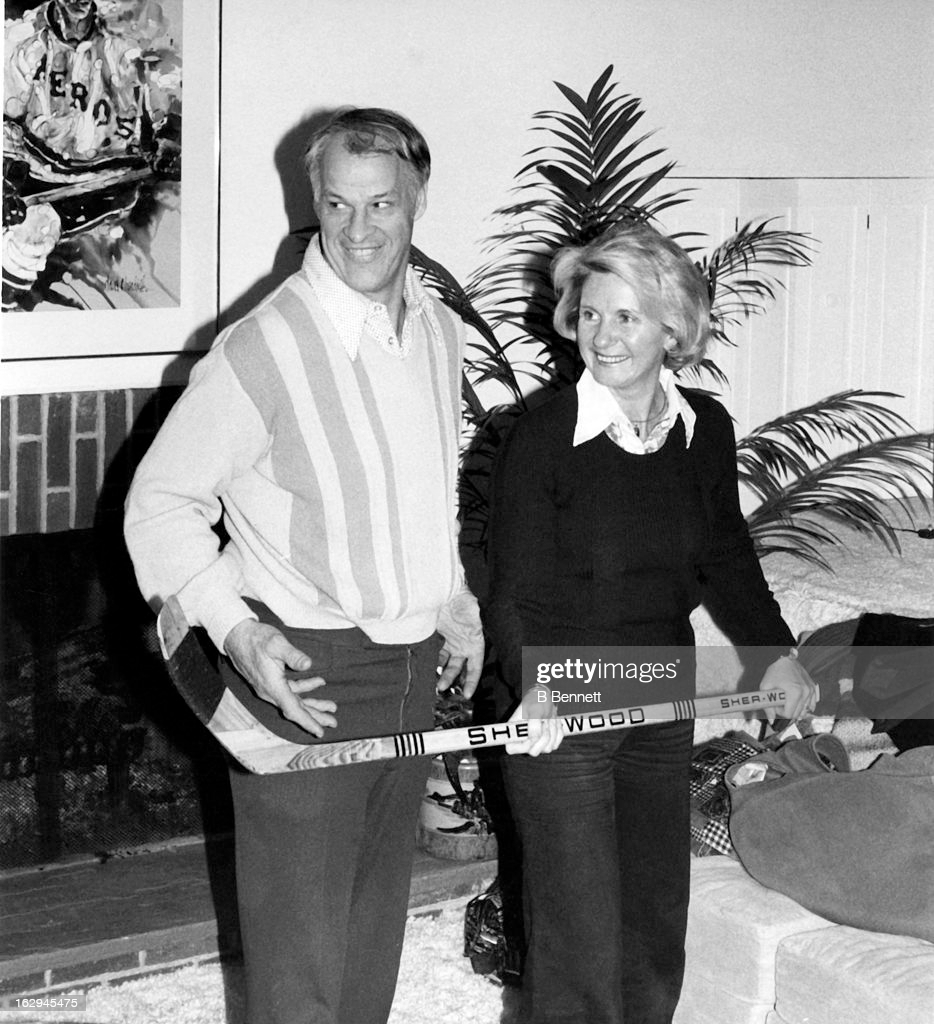
In 2009, Colleen Howe—also known as Mrs. Hockey—passed away as she battled with a form of dementia known as Pick’s Disease. The passing of his wife inspired Howe to spend a significant amount of time raising money for research and awareness to the disease of dementia. In 2010, Mr. Hockey changed to Dr. Hockey as he was awarded a degree of Doctor of Laws from the University of Saskatchewan.
Howe passed away on June 10, 2016.
Mr & Mrs Hockey
Gordie & his sons
Sources Used For This Page: youtube.com, hhof.com, thehockeywriters.com, and photos in order: thestarphoenix.com, Toronto.citynews.ca, and gettyimages.com
The Howe…and Why of naming the School after Colleen and Gordie Howe.
May 31st 2001: The School Board had decided to name the school after Gordie Howe and his wife, Colleen. At the time, the district was determined to name new schools after Canadians who were ‘positive and inspirational role models for their students’. Gordie’s wife Colleen had been a long time supporter of many charities, as well as creating the Howe Foundation in 1993 that was dedicated to improving the quality of life for all children.
The Howe name stands for a strong sense of family, the importance of positive adult role models and a commitment to the positive development of children. Their name is synonymous with many of the values our school district wishes to promote in Abbotsford; values that form the basis for Middle School education.
John Smith, Abbotsford District 34 School Board Chair.
August 17th 2001: The school began preparations for moving in , as they started to prepare for the opening of the middle school on September 6th. 600 students and 30 staff entered into the beginning of a brand new school year in a brand new school.
If any children are unaware of the significance of the school’s name, that will change as the school year progresses and assemblies are held
Mr. Stan Peterson, Principal.
Fun Fact No.1!
Colleen and Gordie Howe was one of three new middle schools opening the same week in District 34. Chief Dan George and Simpson Traditional Middle were both converted Elementary schools.
June 25th, 2002: Colleen and Gordie Howe attended a grand opening ceremony and first year celebration of the school being opened. The students were involved in the celebration with the Howe Band performing O Canada, a performance from the dance team, and various students comments. Speeches were also made from a Pastor from Emmanuel Fellowship Church who had also been a Howe parent, and an opening remark from Principal Mr. Stan Petersen. Abbotsford School Board Chairperson, Superintendent, and Member of Parliament had also participated with speeches, ribbon cutting, and unveiling of the dedication plaque.
He was so proud to have his name and his wife’s name on this school. He insisted on having his wife’s name on the school because he said “without her, I wouldn’t have become who I was”.
Paul Giesbrecht, Teacher at Howe Middle.
Fun Fact No.2!
This school has an Olympic athlete alumni! Sophie Schmidt won a bronze medal in 2012 with the Canadian women’s soccer team.
Sources Used For This Page: abbyschools.ca, howemiddle.abbyschools.ca, and The Abbotsford News- The Reach Archives
Terry Fox Elementary is a school that specializes in a holistic approach in their academics, athletics, arts, as well as cultural studies. They are equipped with specialized educators to provide a multitude of assistance such as: a progressive social emotional learning program, food programs, counseling, learning assistance, indigenous cultural support, physical and emotional regulation support.
“Visitor comments refer to the ‘positive feeling’ and ‘comfortable tone’ that they sense when visiting or working in the school”.
anonymous
Accessible and Inclusive Playground
On November 30th 2007, a brand new playground had been completed. This unique and inclusive playground was funded by the Optimist Club of Abbotsford. The school was also presented with a plaque and cheque from the Ronald MacDonald House Charities, and had received a grant for wheelchair accessible equipment from the Rick Hansen Foundation.
Abbotsford Post Article on the completion of the playground, pictured with an representative from the Ronald MacDonald House Charities.
Sources Used For This Post: The Abbotsford Post, and the Reach Archives
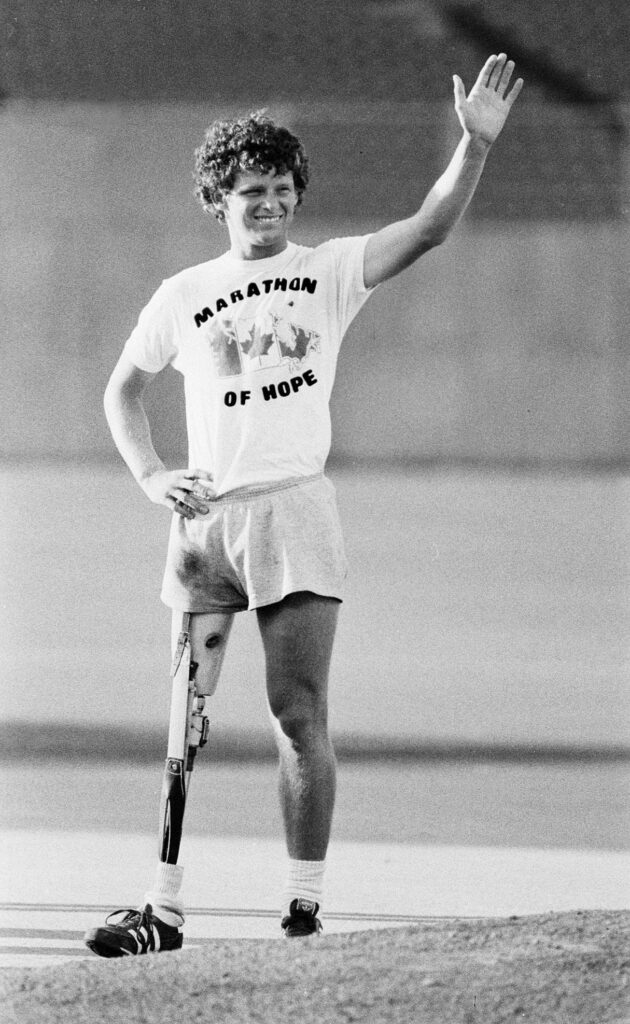
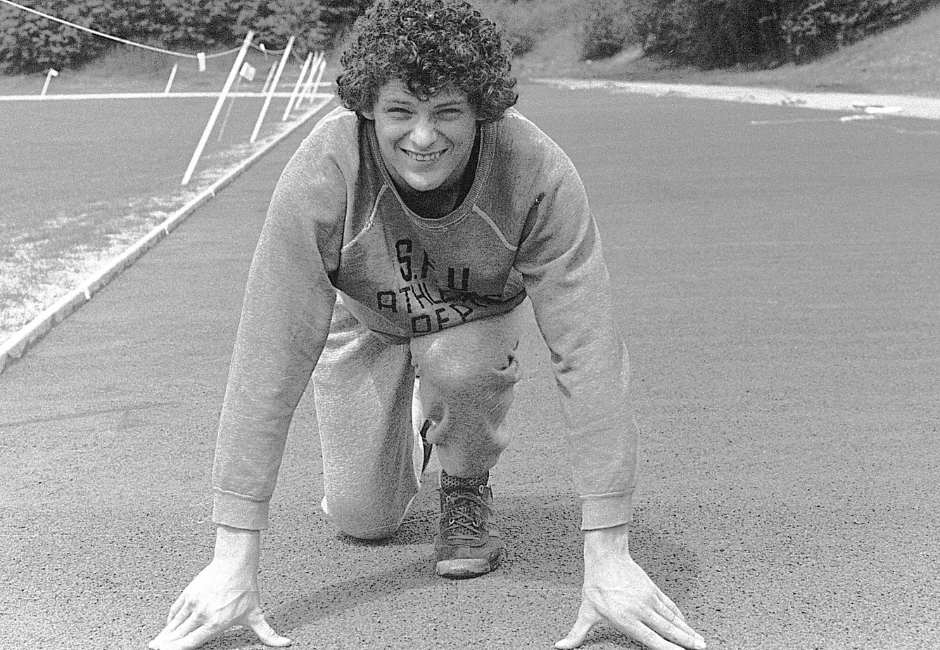
Terry Fox was born on July 28th, 1958 in Winnipeg Manitoba to Betty and Rolly Fox. Terry was an avid basketball player and played on the SFU junior varsity team while he was attending as a Kinesiology student. In 1977 when he had been an active sports player, he was diagnosed with bone cancer. As he underwent chemotherapy, the cancer had spread and resulted in the amputation of six inches above the knee on his right leg.
Terry was inspired to raise money for cancer research when he had been in the hospital, which is how the Marathon of Hope was created. On April 12, 1980, Terry decided that he was going to run to raise fundraising and he wanted to accomplish it by running across Canada. After starting in Newfoundland and running for 143 days, cancer had spread to his lungs. This had caused him to stop his travels in Thunder Bay, Ontario. Throughout his journey, he accomplished running 26 miles per day, 7 days a week.
Terry was known for his courage, determination, and selflessness as he became an inspiration to all of Canada, and around the world. At the age of 22, Terry lost his battle to cancer on June 28th, 1981.
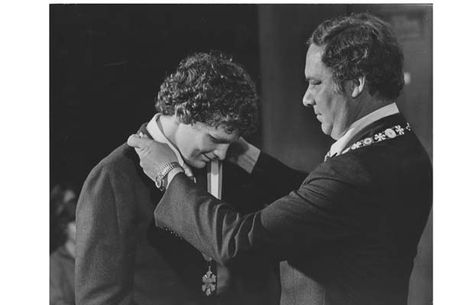
Terry was recognized for many honors and awards during and after his life. Four of the more notable awards he had received just before his passing was in October 1980. He received the British Columbia’s highest civilian award: The Order of the Dogwood, in November 1980, The American Cancer Society presented Terry with their highest award, The Sword of Hope, in August 1981. Terry was also inducted into the Canadian Sports Hall of Fame, and in June 1999, in a national survey, Terry was voted Canada’s Greatest Hero.
Sources Used For This Page: youtube.com, sfu.ca/terryfox, terryfox.org, and thecanadianencyclopedia.ca